

Person reviewing car loan balance on smartphone next to a parked car
How to Pay the Principal on a Car Loan

Reducing your car loan balance faster than the standard payment schedule requires targeting the principal—the actual amount you borrowed. Many borrowers make regular monthly payments without realizing they can accelerate payoff and cut interest costs by directing extra funds specifically toward principal reduction. Understanding the mechanics of principal payments and following the right procedures ensures your extra money works exactly as intended.
Why Paying Principal Matters on Your Car Loan
When you pay principal on car loan balances ahead of schedule, you directly shrink the amount that accrues interest each month. Auto loans calculate interest based on your remaining principal, so every dollar that reduces this balance immediately decreases future interest charges.
Consider a $25,000 loan at 6% APR over 60 months. Your monthly payment sits around $483, but only about $358 goes toward principal in the first payment—the rest covers interest. By adding just $100 monthly toward principal from the start, you could shave roughly eight months off the loan term and save over $800 in interest.

Author: Derek Halvorsen;
Source: ruralxchange.net
Beyond interest savings, paying down principal builds equity in your vehicle faster. This matters if you need to sell or trade the car before the loan ends. Negative equity—owing more than the car's worth—traps many borrowers who financed with minimal down payments or long loan terms. Aggressive principal reduction helps you reach positive equity sooner, giving you flexibility if circumstances change.
The psychological benefit shouldn't be overlooked either. Watching your principal balance drop faster than scheduled creates momentum. Some borrowers find that seeing tangible progress motivates them to find additional money for extra payments, creating a positive cycle that accelerates debt elimination.
How Car Loan Principal Payments Work
Car loans use simple interest calculation, which means interest accrues daily based on your current principal balance. Your lender multiplies the principal by your annual interest rate, divides by 365, then multiplies by the number of days since your last payment.
Each standard monthly payment splits between interest and principal according to an amortization schedule. Early in the loan, interest claims a larger share because the principal balance is highest. As you pay down the loan, the principal portion gradually increases while the interest portion shrinks—even though your total payment stays the same.
When you make an extra payment designated for principal, it doesn't change your next month's required payment amount or due date. Instead, it jumps ahead in the amortization schedule. You're essentially making future principal payments now, which means those future months will calculate interest on a lower balance. The regular payment due date and amount remain unchanged unless you refinance or pay off the loan entirely.
Lenders must apply payments in a specific order by law. They typically apply funds to fees and late charges first, then interest, then principal. This sequence explains why specifying "principal only" matters—without that instruction, your extra payment follows the standard allocation formula, and most of it might cover interest that hasn't even accrued yet, depending on your payment timing.
Step-by-Step: Making Principal-Only Payments
Check Your Loan Agreement for Prepayment Penalties
Before sending extra money, review your loan contract for prepayment penalty clauses. These penalties charge fees if you pay off the loan early, though they're increasingly rare on auto loans originated after 2020. Federal law doesn't prohibit prepayment penalties on car loans, but many states restrict or ban them.
Look for language about "prepayment," "early payoff," or "acceleration." Some contracts allow unlimited extra payments but charge a penalty only if you pay the entire balance within the first 12 or 24 months. Others permit a certain amount of extra principal annually before penalties apply.
If you find a prepayment penalty clause, calculate whether the interest savings from extra payments outweigh the penalty cost. For loans with small balances or low interest rates, penalties might eliminate any financial benefit. Contact your lender directly if the contract language seems unclear—loan servicing representatives can confirm whether penalties apply to your specific payment plan.
Contact Your Lender for Payment Instructions
Every lender handles principal-only payments differently. Some provide a dedicated field in their online payment portal labeled "additional principal" or "principal only." Others require you to call and specify the payment type verbally. A few still insist on mailed checks with written instructions.
Call your lender's customer service line and ask these specific questions:
- How do I designate a payment as principal-only?
- Can I submit principal payments through the online portal, or must I use another method?
- Will a principal payment affect my next due date or required payment amount?
- How long does it take for principal payments to show on my account?
- Do you send confirmation when a principal payment posts?
Take notes during this conversation, including the representative's name and the date. Some borrowers email themselves a summary immediately after the call to create a timestamped record. This documentation proves useful if payment application errors occur later.

Author: Derek Halvorsen;
Source: ruralxchange.net
Submit Your Extra Principal Payment
Once you understand your lender's process, submit the payment using their specified method. If using an online portal, look for checkboxes, dropdown menus, or separate fields that distinguish principal payments from regular payments. Never assume the system will automatically apply extra amounts to principal—most default to advancing the due date instead, which doesn't save interest.
For mailed checks, write "APPLY TO PRINCIPAL ONLY" clearly in the memo line and include your loan account number. Some borrowers write this instruction on the check itself and attach a separate letter stating the same instruction with their account details. This redundancy reduces processing errors.
When making payments by phone, explicitly state "I want this payment applied to principal only, not to advance my due date" before providing payment information. Ask the representative to confirm they've noted this instruction on your account. Request a confirmation number for the transaction.
Timing affects how much interest you save. Making principal payments right after your regular monthly payment posts maximizes the time that reduced balance accrues interest. Paying just before your next regular payment is due provides less benefit because the lower balance affects interest calculation for fewer days.
Verify the Payment Was Applied Correctly
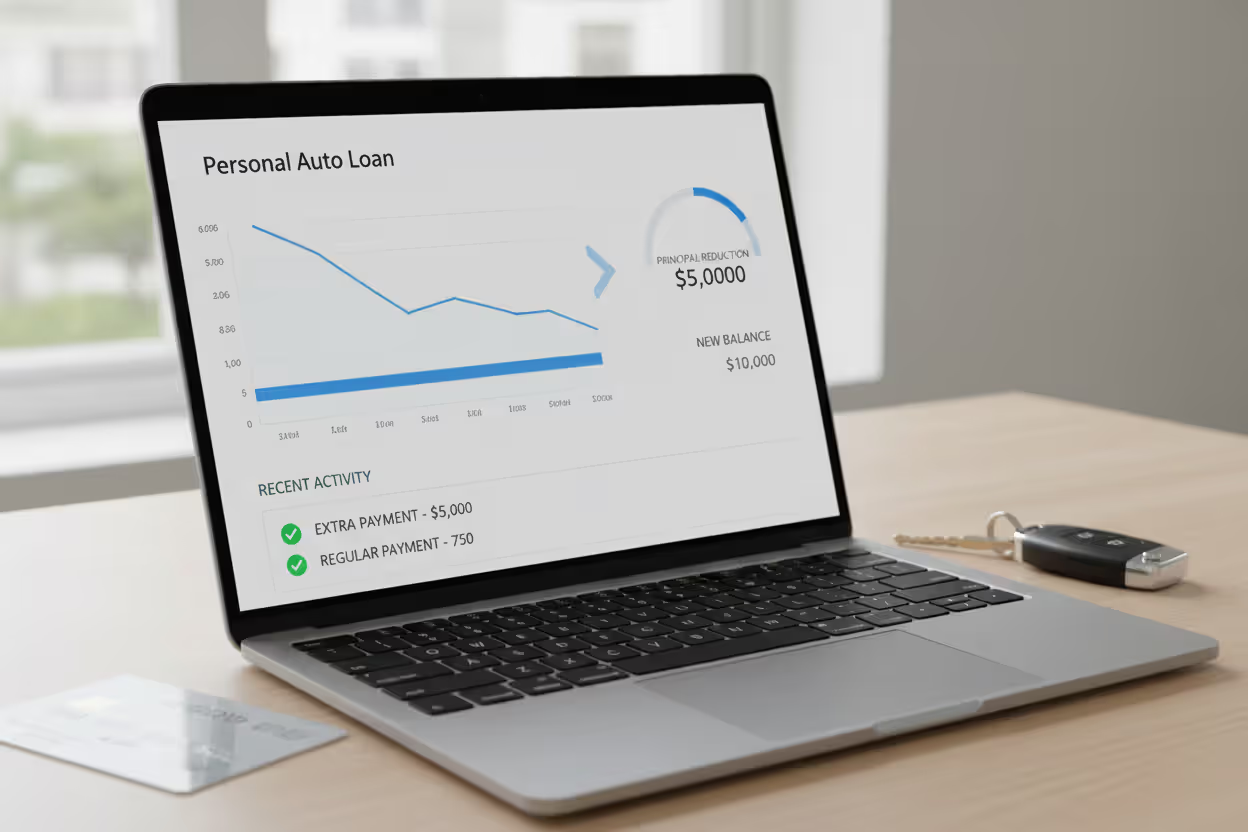
Check your loan account three to five business days after submitting a principal payment. Your account statement should show the payment posted separately from regular payments, clearly labeled as principal or with a designation that distinguishes it from standard payments.
Compare your principal balance before and after the payment. The balance should decrease by exactly the amount you paid, assuming no other transactions occurred. If the balance didn't drop, or if your next due date moved forward, the lender likely applied the payment incorrectly.
Author: Derek Halvorsen;
Source: ruralxchange.net
Misapplication happens more often than it should. Contact your lender immediately if you spot an error. Reference your documentation from the initial payment—confirmation numbers, check images, or portal screenshots. Most lenders will correct misapplied payments without argument when you provide clear evidence of your instructions.
Some borrowers keep a simple spreadsheet tracking principal payments: date sent, amount, confirmation number, and verified posting date. This record takes minutes to maintain but provides invaluable documentation if disputes arise or if you need to demonstrate payment history for refinancing.
Payment Methods for Extra Principal Contributions
Different payment methods offer varying levels of control over how lenders apply your money. The table below compares common options:
| Payment Method | Processing Time | Ease of Specifying Principal | Cost | Best For |
| Online portal | 1-2 business days | Varies by lender; some have dedicated fields, others don't | Free | Lenders with clear principal-only options in their system |
| Phone payment | Same business day | Good if representative confirms instruction | Often $5-15 fee | One-time large payments when portal lacks principal option |
| Mailed check | 5-10 business days | Good with written instructions | Postage cost only | Lenders requiring written principal designation |
| In-person | Same business day | Good with written receipt | Free | Credit unions and local banks with branch access |
| Automatic extra payment | Next scheduled date | Poor; often advances due date instead | Free | Only if lender confirms automatic payments apply to principal |
Online portals provide the fastest, most convenient option when they include proper principal-only designation. Chase Auto, Capital One Auto Navigator, and Ally Bank offer clear interfaces with separate fields for extra principal. Wells Fargo Dealer Services and Santander require more careful navigation—borrowers report the systems sometimes advance due dates instead of applying to principal without explicit selection.
Phone payments work well for occasional large payments, like tax refunds or bonuses, despite transaction fees. The ability to speak with a representative and receive verbal confirmation provides peace of mind that justifies the cost for significant amounts.
Mailed checks seem outdated but remain the most reliable method for lenders with problematic online systems. The paper trail—check image, memo line instruction, mailing receipt—creates clear evidence of your intent. Some credit unions and smaller lenders actually prefer this method because their systems handle principal-only payments more accurately when processed manually.
Common Mistakes When Paying Extra Principal
The most common error is assuming extra money automatically reduces principal. Many borrowers add extra to their regular payment amount without specifying principal-only, then discover the lender advanced their due date instead. This "paid ahead" status doesn't save interest because the principal balance remains unchanged—you've simply prepaid future payments that would have split between principal and interest normally.
Another frequent mistake involves timing. Some borrowers make principal payments before their regular monthly payment posts, creating confusion in the lender's system. Always let your scheduled payment clear completely before submitting extra principal, typically waiting 24-48 hours after the regular payment posts.
Skipping verification allows errors to compound. A borrower who makes monthly extra payments without checking might not notice misapplication for months. By then, correcting multiple misapplied payments becomes a bureaucratic hassle requiring escalation to supervisors and potentially written disputes.
Some people stop making regular payments once they've paid several months ahead, thinking they've earned a break. This approach can trigger late payment reports to credit bureaus because lenders still expect your scheduled payment each month regardless of paid-ahead status. Extra principal payments never eliminate your obligation to make regular payments on time.
Borrowers occasionally make principal payments too small to matter meaningfully. A $10 monthly extra payment on a $20,000 loan saves minimal interest and extends the payoff by only a few weeks. While every bit helps, transaction time and potential fees make very small extra payments inefficient. Saving extra money for quarterly or semi-annual larger principal payments often makes more sense.
How Much Extra Should You Pay Toward Principal?
The right amount depends on your complete financial picture, not just your car loan. Before directing extra money toward your auto loan, ensure you've covered higher-priority financial needs.

Author: Derek Halvorsen;
Source: ruralxchange.net
First, maintain an emergency fund covering at least three months of essential expenses. Using extra cash for principal payments backfires if an unexpected expense forces you to use high-interest credit cards or skip loan payments entirely. Your emergency fund provides the cushion that makes aggressive debt payoff sustainable.
Next, capture any employer 401(k) match. If your employer matches contributions up to 5% of salary, contribute at least that amount before paying extra on your car loan. The match provides an immediate 100% return that far exceeds the interest savings from extra principal payments.
After securing these foundations, consider your car loan's interest rate relative to other debts. Credit card balances at 20% APR should take priority over a 4% car loan. Focus extra payments on the highest-interest debt first—a strategy called the avalanche method—to minimize total interest paid across all obligations.
For the car loan specifically, many financial advisors suggest starting with an extra $50-100 monthly if your budget allows. This amount creates noticeable progress without straining most household budgets. A $100 monthly extra payment on a $20,000 loan at 5% APR saves roughly $1,200 in interest and cuts about 10 months from a 60-month term.
Lump sum payments from bonuses, tax refunds, or windfalls accelerate payoff dramatically. Applying a $2,000 tax refund to principal immediately saves interest on that amount for the remaining loan term. Even if you can't afford regular extra payments, annual lump sums still provide substantial benefits.
Online auto loan calculators show exactly how extra payments affect your specific loan. Input your current balance, interest rate, and remaining term, then experiment with different extra payment amounts. Most calculators display total interest saved and new payoff dates, helping you choose an extra payment amount that balances progress with budget comfort.
Most borrowers focus exclusively on their monthly payment amount when shopping for car loans, but the real cost lies in total interest paid over the loan term. Making even modest extra principal payments—$75 to $100 monthly—can save thousands in interest and build equity much faster. I've seen clients shave two years off a five-year loan with this simple strategy, freeing up that monthly payment for retirement savings or other goals years earlier than they anticipated
— Rebecca Torres
Frequently Asked Questions About Car Loan Principal Payments
Paying down your car loan principal faster than required puts you in control of your debt timeline rather than following the lender's schedule. The strategy works best when you've covered financial basics—emergency savings and retirement contributions—and when your car loan carries a higher interest rate than your savings account offers.
Start by confirming your lender's specific process for principal-only payments. A five-minute phone call prevents months of misapplied payments and frustration. Choose a payment method that clearly designates principal and creates a paper trail. Even small extra payments add up over time, but larger quarterly or annual payments often make more practical sense than tiny monthly additions.
The real power of extra principal payments comes from consistency and verification. Set a realistic amount you can sustain without straining your budget, then make it routine. Check each payment posts correctly, keeping simple records that protect you if problems arise. This disciplined approach transforms your car loan from a five- or six-year obligation into a faster, cheaper debt that frees up money for other financial priorities sooner than you might expect.
Related Stories

Read more

Read more




The content on this website is provided for informational and educational purposes only. It offers general guidance on topics related to car loans, auto refinancing, interest rates, credit scores, loan terms, and vehicle financing options. The information presented should not be considered financial, legal, or professional advice.
Auto loan terms, interest rates, approval requirements, and refinancing options may vary depending on the lender, credit profile, and individual circumstances.
While we aim to keep the information accurate and up to date, we make no guarantees regarding its completeness or reliability. Visitors should review official loan documents and consult with qualified financial professionals before making decisions related to auto loans or refinancing.