

Person holding a credit card while reviewing a car loan payment on a laptop
Can You Pay Car Loan with Credit Card

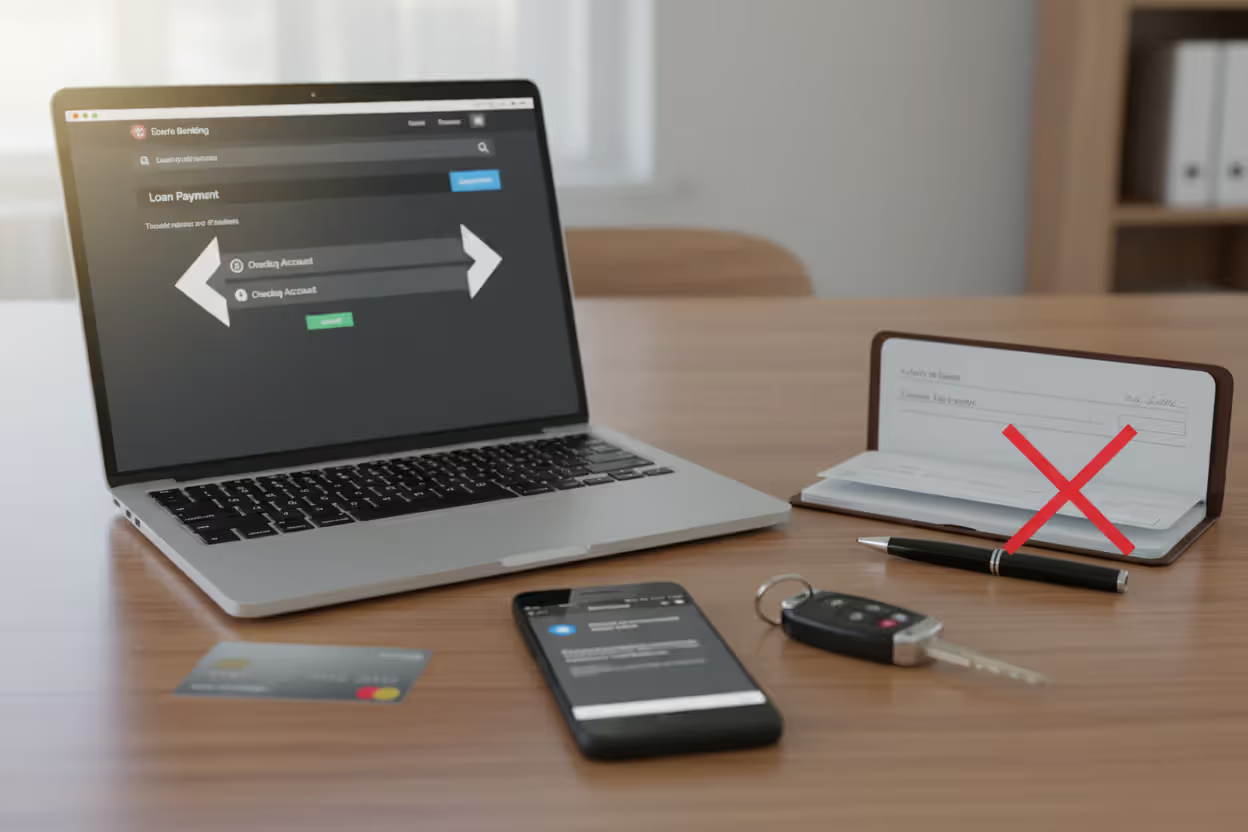
Most car loan servicers don't accept credit cards for monthly payments. If you've ever tried to set up autopay and noticed only bank account options, you're not alone. Lenders typically restrict payment methods to direct bank transfers, checks, or their online portals linked to checking accounts. The reason? Credit card processing fees cut into their profit margins, and they want to discourage borrowers from racking up additional debt to service existing loans.
Still, some workarounds exist. Whether they make financial sense depends on your situation, the fees involved, and your ability to manage the resulting credit card balance responsibly.
How Car Loan Payments Typically Work
Auto lenders structure their payment systems around low-cost methods. ACH transfers (Automated Clearing House) move money directly from your checking or savings account to the lender with minimal fees—often free for both parties. Many borrowers set up automatic monthly debits through their loan servicer's website or mobile app.
Traditional checks still work, though fewer people mail them in 2026. Some lenders operate physical branches where you can hand over a check or money order in person. Online portals have become the standard, letting you schedule one-time payments or recurring transfers from a linked bank account.
Credit cards rarely appear as an option in these systems. Processing a credit card payment costs lenders 2–3% of the transaction amount in merchant fees. On a $500 car payment, that's $10–$15 lost per month. Multiply that across thousands of borrowers, and the expense becomes significant. Beyond the cost, lenders also worry about borrowers who might default on both the car loan and the credit card debt used to pay it, creating a cycle of compounding financial trouble.
Some online-only lenders or smaller credit unions occasionally accept credit cards but typically pass the processing fee directly to you as a "convenience charge." Even when available, this option usually costs more than it's worth unless you have a specific strategy in mind.
Author: Derek Halvorsen;
Source: ruralxchange.net
Methods to Pay a Car Loan with a Credit Card
Using Third-Party Payment Services
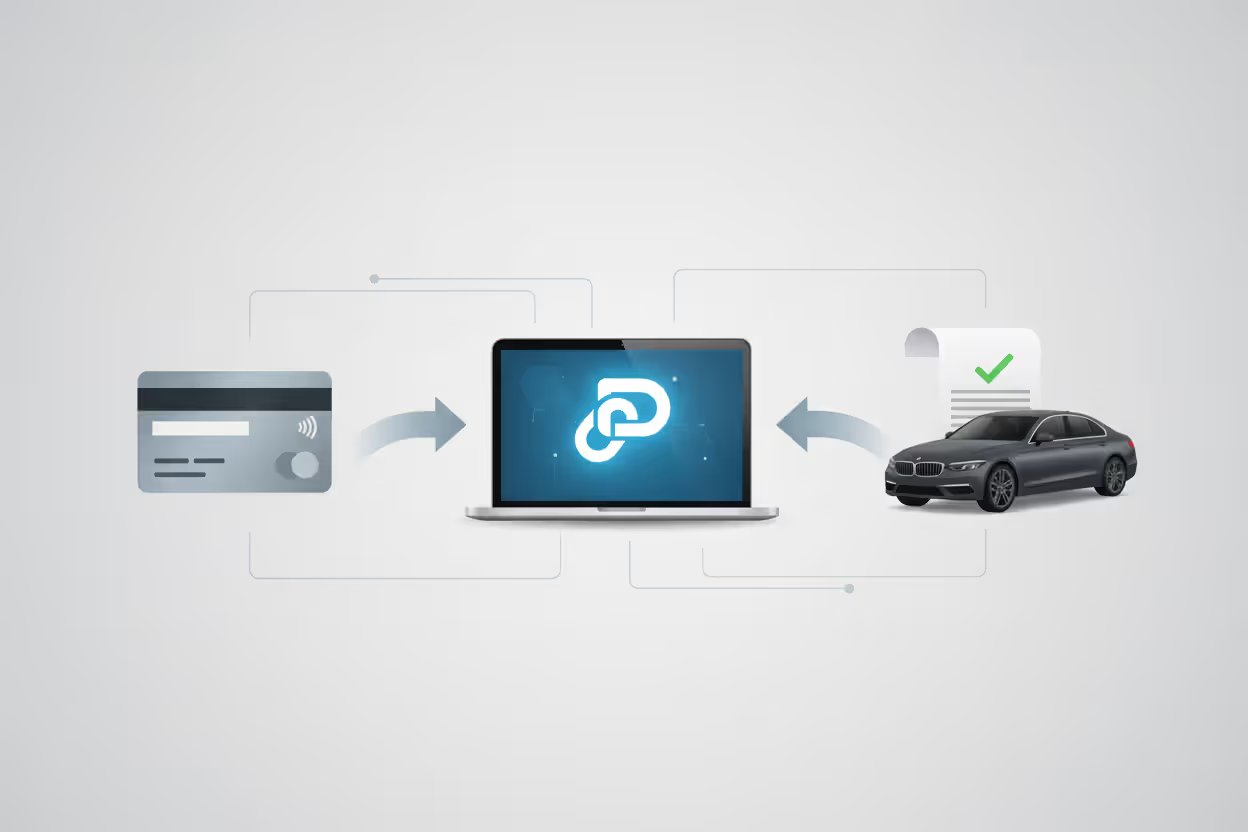
Services like Plastiq, PayPal, and similar platforms act as intermediaries. You charge your credit card through their system, they collect a fee (usually 2.5–3% of the payment amount), and they send your lender a check or electronic transfer. Your lender receives a standard payment and never knows a credit card was involved.
Example: You owe $450 on your car loan. Through a payment service charging 2.85%, you'd pay an extra $12.83 in fees. If your credit card offers 2% cash back, you'd earn $9 in rewards but still lose $3.83 net. The math works only if you're chasing a sign-up bonus worth hundreds of dollars or need to meet minimum spending requirements for premium rewards cards.
These services occasionally run promotions with reduced fees or fee-free periods for new users. If you time it right, you might pay your loan without extra cost while earning rewards. Just read the fine print—some promotions exclude certain payment categories or cap the fee-free amount.
Author: Derek Halvorsen;
Source: ruralxchange.net
Balance Transfer Checks
Credit card issuers sometimes mail blank checks tied to your account. You write one to your auto lender, and the amount becomes a balance transfer on your card. The lender cashes a regular check; your credit card issuer treats it as a transferred balance.
Balance transfer checks typically carry a fee of 3–5% of the amount transferred, with a minimum around $5–$10. Unlike purchase transactions, these checks often start accruing interest immediately unless you have an active 0% promotional APR on balance transfers. Even with a 0% promo rate, that upfront fee cuts into any benefit.
A few issuers offer no-fee balance transfer checks during promotional periods, but these are rare in 2026. If you receive one, verify the terms before writing it. Some checks count as cash advances instead of balance transfers, triggering higher fees and immediate interest at rates often exceeding 25%.
Cash Advances (brief mention, with caution)
Taking a cash advance from your credit card—whether at an ATM or through a convenience check—lets you deposit cash into your bank account and then pay your loan. This method almost never makes sense financially.
Cash advance fees run 3–5% or $10 minimum, whichever is greater. Interest starts accruing the moment you take the advance, with no grace period. Cash advance APRs frequently hit 27–30%. On a $500 advance, you'd pay $15–$25 upfront, plus roughly $12 in interest if you paid it off after one month. That's $27–$37 in costs to move $500, or about 5.4–7.4% effective cost for 30 days.
Only consider this in genuine emergencies where missing your car payment would trigger repossession and you have no other options. Even then, contacting your lender about a payment extension or hardship program usually works out better.
Fees and Costs to Consider
Every workaround for paying a car loan with a credit card involves fees, interest, or both. Understanding the full cost helps you decide if the strategy makes sense or if you're just moving debt from one place to another at a higher price.
| Method | Typical Fees | Interest Implications | Reward Eligibility | Processing Time |
| Third-party service | 2.5–3% of payment | Standard purchase APR; grace period applies if you pay in full | Yes, earns rewards | 3–7 business days |
| Balance transfer check | 3–5% of amount (or $5–$10 min) | Often immediate; 0% promo rates possible | No rewards earned | 5–10 business days |
| Cash advance | 3–5% or $10 min | Immediate at high APR (25–30%+) | No rewards earned | 1–2 business days |
| Standard ACH/bank transfer | Free or <$1 | No credit card interest | No rewards | 1–3 business days |
Convenience fees from third-party processors eat into any rewards you might earn. A card offering 1.5% cash back on all purchases loses money when you pay a 2.85% fee. Premium travel cards offering 2–3 points per dollar can sometimes come out ahead if you value those points highly, but only if you pay the credit card balance in full before interest charges kick in.
Balance transfer fees seem reasonable at 3% if you're moving the debt to a 0% APR card for 12–18 months. That buys you time to pay down the balance without interest, which can help if you're juggling multiple debts. But you're still paying 3% upfront, and any remaining balance after the promo period gets hit with the standard APR, often 18–24%.
Cash advances combine the worst of both worlds: high upfront fees and immediate interest at punishing rates. The math rarely works unless you're in a crisis and have exhausted every other option.

Author: Derek Halvorsen;
Source: ruralxchange.net
Pros and Cons of Paying Your Car Loan with a Credit Card
When It Might Make Sense
Chasing a credit card sign-up bonus is the most common valid reason. Many premium cards offer 50,000–100,000 bonus points or miles if you spend $3,000–$5,000 in the first three months. If you can't hit that spending threshold organically, paying a few car loan installments through a third-party service might push you over the line. A $75 fee to unlock $800 worth of travel rewards creates net value.
Short-term cash flow problems sometimes justify the strategy. If you're between paychecks and your car payment is due, using a credit card buys you a few weeks. You'll pay the processing fee, but if the alternative is a late payment fee from your lender plus a hit to your credit score, the credit card route might cost less overall. Just be certain you can pay off the card when your paycheck arrives.
Consolidating debt onto a 0% balance transfer offer can lower your total interest costs if you're strategic. Say your car loan charges 8% APR and you have 15 months left. Transferring the remaining balance to a card with 0% APR for 18 months (even after paying a 3% transfer fee) reduces your interest expense if you pay off the card before the promo ends. This requires discipline and careful math, but it's possible.
Earning rewards on large payments appeals to credit card enthusiasts. If you have a card offering 3% back on all purchases and a third-party service charging 2.5%, you net 0.5% profit. On a $600 payment, that's $3. Not life-changing, but if you're paying the loan anyway and the service is reliable, why not?
Risks and Drawbacks
The biggest risk is accumulating credit card debt to pay off car loan debt, leaving you worse off. If you don't pay the credit card balance in full, you're now paying interest on both the car loan and the credit card. Credit card APRs typically exceed auto loan rates by 10–15 percentage points. You've effectively refinanced part of your car loan at a much higher rate.
High credit utilization from large payments can temporarily lower your credit score. If you charge $500 to a card with a $2,000 limit, your utilization jumps to 25% on that card. Credit scoring models penalize utilization above 30%, and even lower ratios can drag down your score if you're trying to optimize it for a mortgage or other major loan application.
Processing delays occasionally cause problems. Third-party services usually take 3–7 business days to deliver payment to your lender. If you're cutting it close to your due date, a delay could result in a late fee or late payment notation on your credit report. Always initiate payments at least a week before the deadline.
Fees compound quickly if you make this a habit. Paying a 2.85% fee every month on a $450 payment costs $154 per year. That's real money leaving your pocket for the convenience of using a credit card. Unless you're earning rewards worth more than $154 annually or have another compelling reason, you're just throwing money away.
Some lenders explicitly prohibit third-party credit card payments in their terms of service. If they discover you're using a workaround, they might reject the payment, charge you a returned payment fee, or even accelerate your loan (demanding full repayment immediately). This is rare but not unheard of with smaller lenders or buy-here-pay-here dealerships.

Author: Derek Halvorsen;
Source: ruralxchange.net
What Major Lenders Allow
Most major auto lenders don't accept credit cards directly. Ally Financial, Capital One Auto Finance, and Wells Fargo Auto all restrict payments to bank accounts, checks, or money orders. Their online portals and mobile apps only let you link checking or savings accounts.
Captive finance companies—the lending arms of car manufacturers like Toyota Financial Services, GM Financial, and Ford Credit—follow the same pattern. They've built their payment infrastructure around ACH transfers and want to avoid credit card processing costs.
Credit unions sometimes show more flexibility. A handful of smaller credit unions accept credit cards for loan payments but charge convenience fees that negate most benefits. Navy Federal Credit Union and PenFed, two of the largest, do not allow credit card payments on auto loans as of 2026.
Online lenders and fintech auto finance companies occasionally accept credit cards. Carvana and Vroom, which sell cars online, have experimented with credit card payments for down payments but generally don't allow them for monthly installments. Upstart and LendingClub, which offer personal loans sometimes used to buy cars, also restrict payment methods to bank transfers.
If you're considering using a credit card for car payments, call your lender before setting up any third-party service. Ask explicitly whether they accept payments from intermediaries and whether doing so violates your loan agreement. Get the answer in writing if possible—an email or chat transcript works. This protects you if a payment gets rejected or causes complications.

Author: Derek Halvorsen;
Source: ruralxchange.net
Alternatives to Using a Credit Card
Refinancing your auto loan often saves more money than any credit card strategy. If your credit score has improved since you took out the loan, or if interest rates have dropped, refinancing to a lower rate reduces your monthly payment and total interest cost. Many online lenders and credit unions offer auto refinancing with no fees and quick approval.
Personal loans from banks or credit unions can consolidate your car loan with other debts at a potentially lower rate than credit cards. If you're thinking about using a credit card because you're struggling with multiple payments, a debt consolidation loan might address the root problem more effectively.
Negotiating directly with your lender for a payment plan or hardship program costs nothing and often works. Most lenders would rather modify your payment schedule temporarily than repossess your car and sell it at auction. If you've lost income, had a medical emergency, or face another genuine hardship, call your lender's customer service line and ask about options. Many will defer a payment, extend your loan term, or temporarily reduce your payment.
Side income from gig work, selling unused items, or picking up extra shifts provides cash without fees or interest. If you need $500 for your car payment, driving for a rideshare service or selling furniture might be faster and cheaper than credit card fees and interest.
Emergency funds exist for situations like unexpected car payments when cash is tight. If you don't have one, building even a small buffer of $500–$1,000 prevents the need for expensive workarounds. Automate $50–$100 per month into a separate savings account until you have a cushion.
Using a credit card to pay an installment loan like a car note is rarely a sound financial decision unless you're executing a very specific strategy—like capturing a valuable sign-up bonus or leveraging a 0% balance transfer to save on interest. The fees and risks usually outweigh the benefits for everyday payments. If you're considering this because money is tight, that's a red flag that you need to address your budget or speak with your lender about hardship options, not add more expensive debt
— Michael Chen
Frequently Asked Questions
Paying your car loan with a credit card is technically possible through third-party services, balance transfer checks, or cash advances, but direct acceptance from lenders remains rare in 2026. The fees involved—typically 2.5–5% of each payment—make this an expensive way to handle a routine monthly obligation.
The strategy makes sense in narrow circumstances: unlocking a valuable credit card sign-up bonus, taking advantage of a 0% balance transfer to reduce interest costs, or bridging a short-term gap when you're between paychecks. Outside these scenarios, you're usually better off paying directly from your bank account and avoiding the fees altogether.
If you're thinking about using a credit card because your car payment feels unmanageable, that's a sign to explore alternatives. Refinancing, payment plan negotiations with your lender, or building an emergency fund all address the underlying problem more effectively than shuffling debt between accounts. Credit cards are powerful financial tools when used strategically, but using them to pay other loans requires careful math and honest assessment of whether you're solving a problem or just postponing it.
Related Stories

Read more

Read more


The content on this website is provided for informational and educational purposes only. It offers general guidance on topics related to car loans, auto refinancing, interest rates, credit scores, loan terms, and vehicle financing options. The information presented should not be considered financial, legal, or professional advice.
Auto loan terms, interest rates, approval requirements, and refinancing options may vary depending on the lender, credit profile, and individual circumstances.
While we aim to keep the information accurate and up to date, we make no guarantees regarding its completeness or reliability. Visitors should review official loan documents and consult with qualified financial professionals before making decisions related to auto loans or refinancing.