

Customer discussing financed car trade-in with dealership representative
How to Trade in Car with Loan Balance Still Owed

You're three years into a five-year auto loan when you realize your current vehicle doesn't work anymore—maybe you need more space, better gas mileage, or something more reliable. Good news: you don't have to wait until that last payment clears. Dealers work with financed trade-ins constantly, and the transaction just requires understanding a few financial mechanics that differ from selling a car you own free and clear.
Can You Trade in a Car That Still Has a Loan?
Trading in a financed vehicle? Absolutely doable. Your local dealership has processed dozens—probably hundreds—of these transactions already this year. The mechanics are simple: they buy your car, pay what you owe, and apply any remaining value toward your next purchase.
Here's what actually happens. The dealer gets in touch with whoever holds your loan—could be a bank, credit union, or the manufacturer's finance arm—and asks for the exact payoff figure. That number runs higher than your current balance because it factors in interest through the projected payoff date. Once the dealer knows this amount, they compare it against what your vehicle's worth on their lot. The difference between these two figures determines your equity position.
Got a car worth $20,000 with only $16,000 left on the loan? That $4,000 difference drops right into your down payment bucket for the next vehicle. Flipped scenario—owing $23,000 on a car the dealer values at $18,000? You're looking at $5,000 in negative equity that needs handling either through your new financing or cash out of pocket.
Your lender technically owns your car until that loan gets stamped "paid in full." During the trade-in, the dealership becomes the middleman, making sure your bank receives complete payment and releases the title. This back-and-forth typically stretches across two to three weeks, though you'll be driving your new ride within hours of signing paperwork. The dealer manages all lender communication, which beats trying to coordinate it yourself.
People think they're stuck until the loan's nearly done. Not true. You can trade in during month six or month 46—timing just affects your equity. Come in knowing your payoff amount and realistic trade value. That knowledge shifts the power dynamic in your favor
— Michael Torres
One thing to clear up: the lender holds legal ownership through something called a lien. That's why your name appears on the registration but the title sits in a file cabinet at the bank. The dealer can't resell your trade until that lien gets released, which is why they handle the payoff so meticulously.
Understanding Your Loan Payoff and Vehicle Equity
You need two numbers before stepping onto a dealer's lot: what you owe and what your car's actually worth. How these numbers stack up against each other shapes everything else about your trade-in.

Author: Derek Halvorsen;
Source: ruralxchange.net
Positive Equity vs. Negative Equity Explained
Equity means the gap between market value and loan balance. Positive equity puts you ahead—the car's worth exceeds what you owe. Negative equity flips that around, leaving you owing more than the vehicle could fetch. People call this being "underwater" or "upside down" on the loan.
Consider these two scenarios side by side:
| What You're Looking At | Favorable Position | Challenging Position |
| Outstanding loan balance | $18,000 | $24,000 |
| What dealer will pay | $22,000 | $19,000 |
| Your equity | $4,000 ahead | $5,000 short |
| Money toward new purchase | Full $4,000 credit | Need to cover $5,000 gap |
| Effect on new financing | Borrow less, pay less interest | Finance more, higher monthly cost |
| Smart move | Complete the trade | Wait and pay down debt, or bring cash |
That underwater position hits hardest during years one and two of ownership. Vehicles shed value fastest right after purchase—15% to 20% in year one alone. Small down payment? Long loan term like 72 or 84 months? You're racing against depreciation and often losing.
How to Find Your Current Payoff Amount
Your monthly statement balance? Forget it. That's not the payoff figure. What you need includes additional interest calculated forward to a specific date—usually ten days out—plus any applicable fees your lender tacks on.
Call your lender's customer service line, or better yet, log into their online portal. Most provide instant 10-day payoff quotes you can download or email yourself. This quote remains valid for that ten-day window. Past that, interest accrues daily and bumps the number higher. The quote should list per-diem interest charges so you'll know exactly how much the payoff climbs if the transaction takes longer than expected.
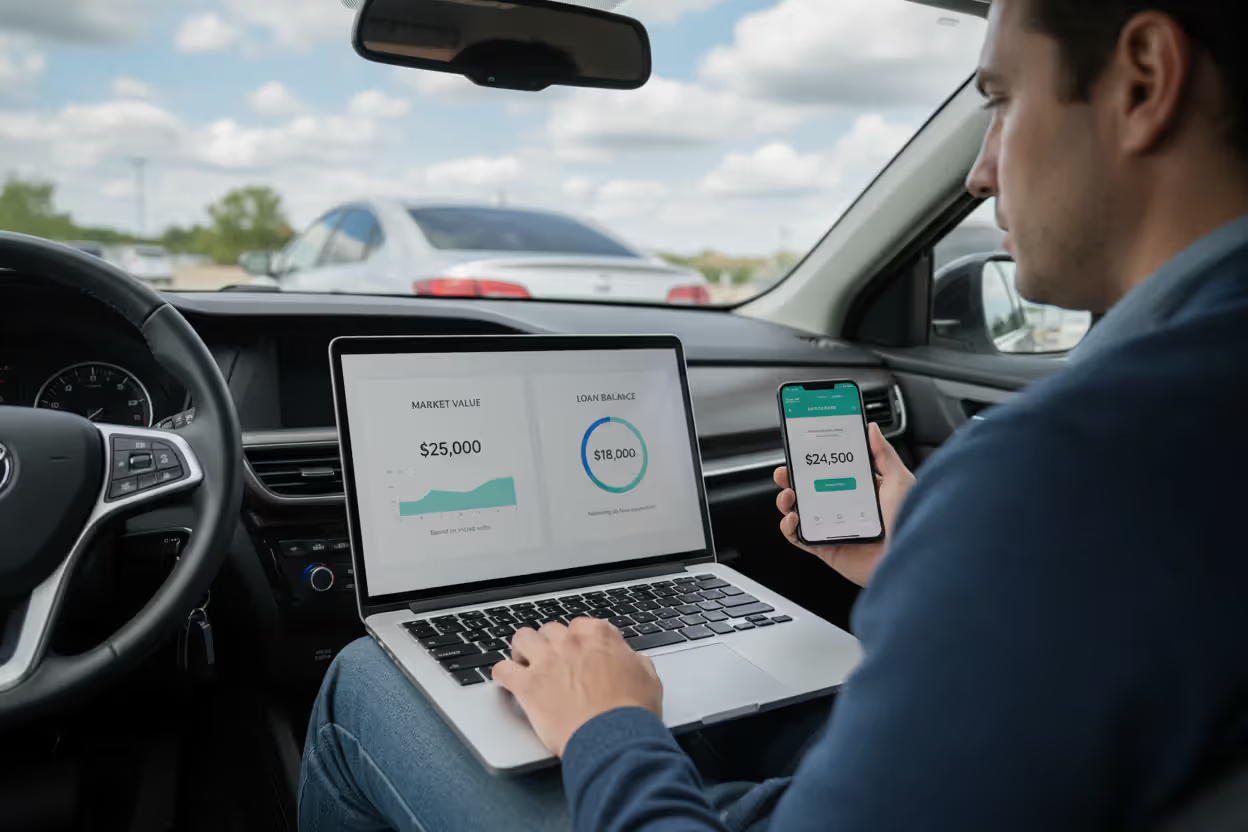
Now figure out what your vehicle's worth. Pull up Kelley Blue Book and Edmunds—both free, both instant. Plug in your car's year, make, model, mileage, and condition. Location matters too; a pickup truck trades higher in Texas than California. These sites generate realistic ranges reflecting what dealers typically offer. Remember, trade-in values represent wholesale pricing—lower than private party sale prices but offset by convenience and potential tax breaks depending on your state.
Be brutally honest about condition. That door ding you barely notice? Dealer sees it. The passenger seat stain from spilled coffee? They're calculating cleaning costs. Accident on the vehicle history report? They're adjusting for diminished value. Inflating condition from "fair" to "good" just sets you up for disappointment during the actual appraisal.
Author: Derek Halvorsen;
Source: ruralxchange.net
Step-by-Step Process to Trade in a Car with a Loan
Trading in a financed vehicle follows a sequence you can predict and prepare for. Knowing what's coming next keeps you organized and prevents last-minute scrambling.
Step 1: Get your payoff quote in writing. Phone your lender or access your online account portal. Request a 10-day payoff quote and save that document—screenshot it, download the PDF, whatever it takes. Write down the exact amount, your full account number, and the lender's official payoff phone number.
Step 2: Research real-world trade values. Hit up two or three valuation sites. Be honest selecting your condition level—"fair" if there's visible wear, not "good" just because you want a higher number. This homework prevents sticker shock when the dealer's appraiser walks around your car with a clipboard.
Step 3: Get multiple dealer appraisals. Most dealerships appraise trade-ins for free, even when you're not buying that day. Bring your registration, driver's license, and loan details. They'll inspect everything, take it for a test drive, pull the vehicle history, then make an offer. Visit at least two dealers to compare—offers vary by hundreds, sometimes thousands.
Step 4: Negotiate trade value and purchase price separately. Never let these numbers blur together into "monthly payment" talk. Nail down your trade allowance first. Then negotiate the new vehicle's price. Then discuss financing. Bundling everything lets dealers shift numbers around in ways that benefit them, not you. Keep these conversations separate and transparent.
Step 5: Scrutinize the numbers on paper. The finance manager prints a worksheet showing trade value, your payoff amount, equity calculation, new vehicle price, down payment, and financed amount. Check every single number against your documents. Math errors happen. Sometimes they're honest mistakes. Sometimes they're not. Catching them now saves massive headaches later.
Step 6: Sign the trade-in paperwork. You'll authorize the dealer to contact your lender and satisfy your loan. There's also a power of attorney form letting them handle title transfer. Hand over your lender's complete information—name, account number, that 10-day payoff figure. Their finance office takes it from there.
Step 7: Verify the payoff went through. Two weeks post-trade, log into your old loan account. Confirm zero balance. Call the lender if you prefer. They should mail you a satisfaction letter stating the lien's been released. File this document permanently—it's proof you don't owe that debt anymore.
What Happens to Your Loan When You Trade In
Behind the scenes, several parties coordinate to transfer ownership and settle your debt.
The dealership's finance office contacts your lender within a day or two of your trade-in. They verify the payoff amount—confirming it matches what you provided—and arrange payment. Most dealers wire transfer funds or send overnight checks. Speed matters because they can't legally resell your trade until they've cleared your loan and received the title.
Your lender receives payment, applies it to your account, and marks the loan satisfied. Then they release their lien on the title. Paper title state? The lender physically mails the title to the dealership with lien release documentation. Electronic title state? They release the lien digitally, allowing the dealer to pull a clear title from the state system. This whole cycle runs 10 to 21 business days depending on your state's DMV processes and your lender's efficiency.
You're off the hook for that old loan the instant the dealer's payment clears. They own that debt now. One important timing note: if your regular payment comes due before the dealer processes the payoff, make that payment. Late payments ding your credit even if "the dealer's handling it." Once everything clears, the lender refunds any overpayment.
Keep insurance active on your old vehicle until the trade finalizes and your new car's covered. Call your insurance company trade-in day to swap vehicles on your policy. This prevents gaps in coverage and stops you from paying premiums on a car sitting on the dealer's lot.
Had gap insurance on your old loan? It typically cancels automatically when the loan's paid off. You might receive a prorated refund for unused coverage. Same goes for extended warranties or prepaid maintenance contracts—ask the dealer about canceling these products and claiming refunds.

Author: Derek Halvorsen;
Source: ruralxchange.net
Trading In with Negative Equity: What You Need to Know
Being underwater complicates things but doesn't kill the deal. You've got options; you just need to understand the financial ripple effects.
Most buyers in this situation roll negative equity into new financing. Owe $24,000 with a trade worth $19,000? That $5,000 shortfall gets added to your new vehicle's price. Buying a $30,000 car means actually financing $35,000. Your monthly payment jumps accordingly, and you'll pay interest on that rolled-over debt for years.
Rolling negative equity forward creates a dangerous cycle. You start your new loan already underwater. Wreck that car or need to trade again quickly? You're looking at even steeper negative equity. Some people get trapped refinancing growing debt from one car to the next.
The cleaner option: pay that negative equity upfront in cash. Coming up with $5,000 hurts now but eliminates the problem entirely. You finance only the new vehicle's actual price, keeping your loan amount and monthly payment reasonable.
Third option: don't trade yet. Keep your current car and attack that loan with extra principal payments. Sometimes just three to six additional months of aggressive payments swings you from negative to positive territory, especially if your car's past the steepest depreciation curve.
When you're significantly underwater—say, $10,000 or more—seriously question whether trading in makes financial sense. If your current vehicle runs fine, keeping it until you've built equity usually beats the alternative. Exception: genuinely unsafe or unreliable cars where ongoing repair costs exceed the financial hit from rolling negative equity.
Gap insurance becomes essential when rolling negative equity into new financing. Standard auto insurance pays only actual cash value if your car's totaled. Finance $35,000 on a car worth $28,000 after initial depreciation, then total it? Insurance pays $28,000. You still owe $7,000. Gap insurance covers that difference, protecting you from devastating out-of-pocket loss.

Author: Derek Halvorsen;
Source: ruralxchange.net
Documents Required for Trading in a Financed Car
Having paperwork ready prevents delays and keeps the transaction moving smoothly.
Loan details: Bring your lender's complete name, your account number, and their payoff department phone number. The dealer needs these to coordinate payment. Got that 10-day payoff quote? Bring it—saves everyone time.
Current registration: Proves you own the vehicle and provides VIN verification. Most states require this for any trade transaction.
Valid driver's license: Government-issued ID matching the name on your loan and registration. Expired license? Update it before attempting to trade.
Insurance documentation: Your current insurance card or policy declarations page showing active coverage on the trade vehicle.
Title, if you have it: Recently paid off your loan and received the title in the mail? Bring it along. Loan still active with lender holding the title? Don't worry about it—the dealer obtains it directly from your lender as part of the payoff process.
Service records: Not mandatory, but maintenance documentation adds value. Receipts showing regular oil changes, tire rotations, brake service, and major repairs demonstrate proper care. Dealers pay more for well-maintained vehicles.
All keys and remotes: Original keys, spare keys, and remote fobs increase trade value. Missing keys cost dealers $200 to $400 to replace. They'll dock your trade value by that amount, maybe more.
Original accessories: Owner's manual, floor mats, cargo covers, phone charging cables—gather anything that came with the vehicle originally. These details matter more than you'd think.
Don't stress about getting the title yourself when your loan's still active. That creates unnecessary complications. Let the dealer handle it—that's literally their job.
Frequently Asked Questions About Trading in Financed Vehicles
Financed vehicle trade-ins happen thousands of times daily across the country. Success comes down to understanding your equity position, organizing documentation, and negotiating with clear separation between trade value and new vehicle price. Whether you're bringing positive equity to the table or managing negative equity, knowing your numbers before arriving at the dealership shifts control into your hands.
Calculate your payoff amount, research what your vehicle realistically trades for, then decide whether trading now makes financial sense. Significantly underwater? Waiting a few months while making extra payments might shift you to a better position. Got positive equity or genuine need for a different vehicle? Trading in offers convenience and possible tax advantages compared to private sales.
Approach the transaction informed and prepared. Verify every number on the transaction worksheet, confirm the dealer processes your payoff promptly, and follow up with your lender to ensure the loan cleared correctly. With proper preparation, trading a financed vehicle becomes straightforward and stress-free.
Related Stories

Read more

Read more




The content on this website is provided for informational and educational purposes only. It offers general guidance on topics related to car loans, auto refinancing, interest rates, credit scores, loan terms, and vehicle financing options. The information presented should not be considered financial, legal, or professional advice.
Auto loan terms, interest rates, approval requirements, and refinancing options may vary depending on the lender, credit profile, and individual circumstances.
While we aim to keep the information accurate and up to date, we make no guarantees regarding its completeness or reliability. Visitors should review official loan documents and consult with qualified financial professionals before making decisions related to auto loans or refinancing.