

Buyer and private seller completing a used car purchase beside a sedan
How to Get a Car Loan for Private Sale

Buying from a private seller usually saves you thousands compared to dealership prices. I've seen buyers negotiate $3,000-$5,000 below retail value—money that stays in your pocket instead of padding a dealer's margin.
Here's what makes it trickier: you're now responsible for all the moving parts. The seller won't process your loan paperwork. Nobody's verifying the title is legitimate. No finance manager is checking that the car's actually worth what you're paying. Those jobs? They're all yours now
This guide shows you exactly how to secure financing when buying from a private party—which lenders actually want your business, what hoops you'll jump through, and the mistakes that blow up deals at the last minute.
Can You Get a Car Loan for a Private Sale?
Get your financing lined up before you even look at the first car.I've watched buyers lose perfect vehicles because they showed up without pre-approval. By the time they got their financing sorted out three days later, someone else had already bought it with cash
— Marcus Chen
You absolutely can, though plenty of lenders won't touch these deals.
The landscape's improved dramatically since 2023. Chase started offering private party loans again after a five-year hiatus. Bank of America expanded their program. Credit unions have always been game, and they're getting even more aggressive with rates to compete for this business.
Why don't all lenders participate? Risk management, plain and simple. When a dealership sells a car, they've inspected it, they guarantee the title's clean, and they have legal liability if something's fraudulent. With private sales, the lender's trusting you to verify everything. If you buy a lemon or the title's got problems, that's your headache—but it becomes the lender's problem if you default.
Here's who'll actually work with you:
Credit unions give you the most flexibility. Mountain America Credit Union finances vehicles up to 12 years old. Navy Federal goes to 15 years for members with strong credit. They'll often approve deals that banks automatically reject.
Traditional banks set tighter boundaries. Wells Fargo cuts off at 8 years old and 80,000 miles. U.S. Bank wants vehicles under 7 years with less than 75,000 miles. Better rates sometimes, but pickier about what they'll finance.
Online specialists like LightStream (through Truist) built their entire model around private party deals. AutoPay connects you with multiple lenders simultaneously. Approval's fast—sometimes same-day—but rates climb quickly if your credit score's below 680.
Manufacturer finance arms occasionally finance private sales of their own brands. Toyota Financial might approve your loan for a used Camry you found on Craigslist, though they'd rather you buy from a dealer.

Author: Derek Halvorsen;
Source: ruralxchange.net
One hard limit almost everyone enforces: they won't finance vehicles worth less than $4,000-$7,500. Shopping for a $3,000 beater? You're paying cash or using a personal loan instead.
How Private Sale Car Loans Differ from Dealer Financing
Walk into a dealership and you're approved in an hour, driving home that afternoon. Buy from a private seller and you're looking at a week-long process with twice the paperwork.
| Feature | Private Sale Loan | Dealer Financing |
| Interest rates | Usually 0.5-2 percentage points higher | Lower thanks to manufacturer incentives |
| Approval speed | Count on 2-5 business days minimum | Same afternoon in most cases |
| Vehicle inspection requirements | You schedule it, you pay for it ($100-200) | Dealer handles it, often invisible to you |
| Seller payment process | You coordinate check delivery or wire transfer | Finance office manages everything |
| Lender options | Only banks and credit unions offering private party programs | Dealers submit to 5-10 lenders at once |
| Vehicle warranty | Zero unless you buy third-party coverage | Many include basic warranty or CPO guarantees |
The rate difference hits your wallet hard over time. That 0% APR financing dealers advertise for new cars? Forget it with private sales. Even manufacturer-subsidized rates for used cars beat what you'll get privately. A Toyota dealer might offer 5.9% on a used RAV4. That same RAV4 from a private seller runs you 7.5-8.5% with similar credit.
Timing creates the biggest frustration. Dealers push papers through their system in hours because they do fifty deals a week. Your credit union processes private party loans maybe twice a week—it's not their priority. You'll wait 2-3 days for approval, then another day while they verify the VIN matches the title, then another day for the payment to process.
And that inspection requirement? Dealerships inspect trade-ins as part of their reconditioning process. You're paying a mechanic $150 out of pocket, then waiting for them to email the lender a report before your loan gets final approval. Miss one problem in that inspection and you own it forever—no recourse against the seller once money changes hands.
Where to Get a Car Loan to Buy from Private Seller
Start this search two weeks before you seriously shop for cars. Last-minute financing applications kill deals.
Credit Unions vs. Banks for Private Party Auto Loans
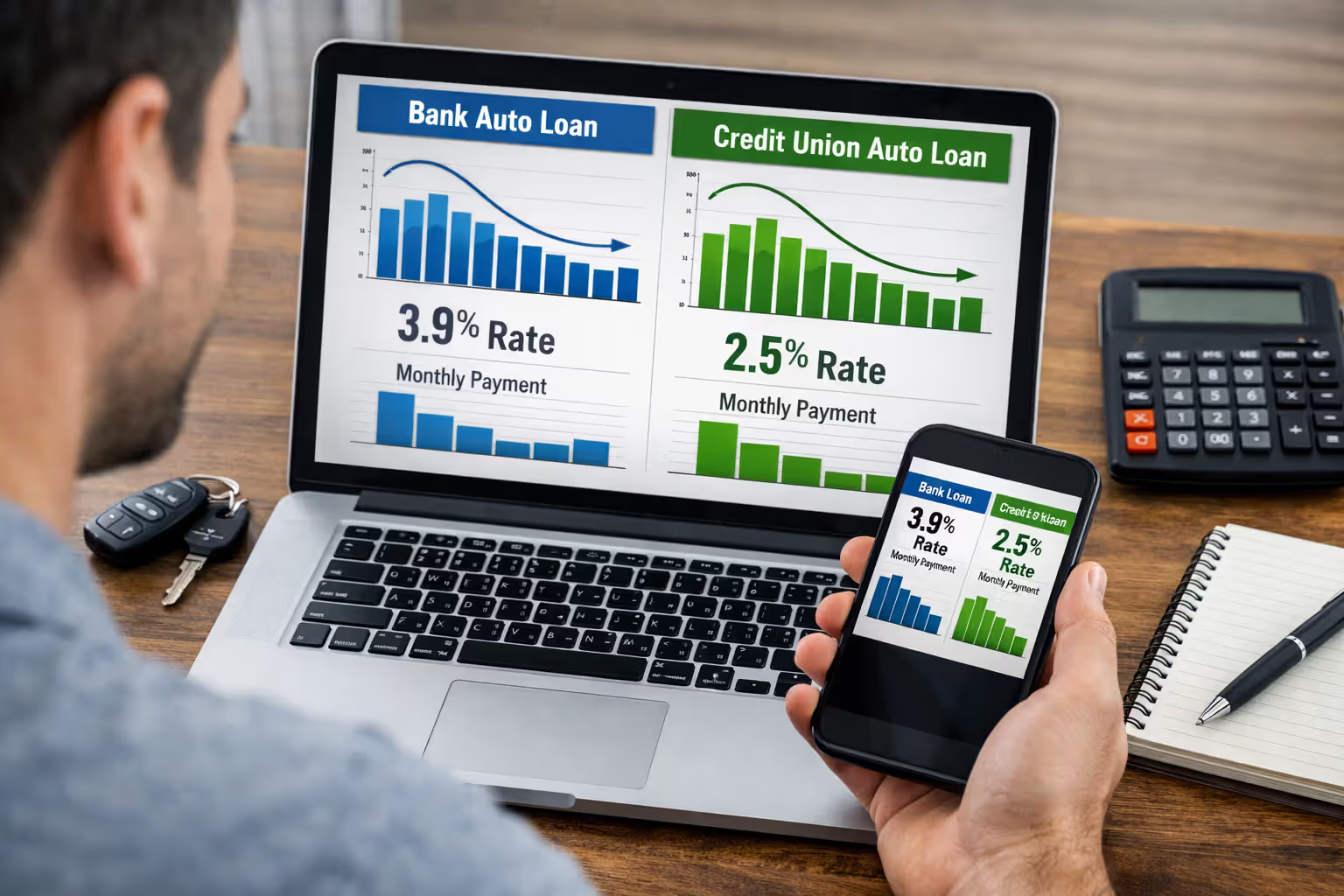
Credit unions win this category almost every time. PenFed just quoted me 5.49% APR for a private party loan last month—my bank wanted 7.25% for the identical deal. That's $1,600 in interest savings on a $22,000 loan over five years.
Member-owned structure drives these better rates. Credit unions answer to members, not shareholders demanding profit growth. They're consistently 0.75-1.5 percentage points cheaper than banks for private party financing.
The membership requirement stops some people. Navy Federal requires military connection. Local credit unions often limit membership to specific counties or employers. But Alliant Credit Union lets anyone join for a $5 donation to a partner charity. Digital Federal Credit Union accepts members nationwide who join an affiliated organization.
Banks offer convenience if you're already their customer. Your checking account's at Chase, your mortgage is through Chase, they know your financial history—approval's often smoother even if rates are higher. Plus banks tend to have more branches for in-person help if you need hand-holding through the process.
Vehicle restrictions differ dramatically. My local credit union finances cars up to 10 years old with 120,000 miles. Bank of America caps at 7 years and 75,000 miles. Shopping for a 2017 vehicle with 90,000 miles? The bank's out, but credit unions will compete for your business.
Real example: Sarah needed financing for a 2020 Honda Accord with 52,000 miles, priced at $18,500. Chase offered 7.4% for 60 months. Her credit union (which she joined by paying a $10 membership fee) came back at 5.9%. Same loan amount, same term. The credit union route saved her $1,425 in interest over five years.
Author: Derek Halvorsen;
Source: ruralxchange.net
Online Lenders That Finance Private Sales
LightStream dominates the online private party space. They advertise rates starting at 5.99% with excellent credit, and they actually deliver those rates—I've seen the loan documents. Plus they fund fast, sometimes same-day if you submit everything by noon.
AutoPay works differently—they're a marketplace, not a direct lender. Submit one application and they shop it to eight lenders simultaneously. You see competing offers within minutes, pick the best rate, done. This approach works brilliantly if your credit's in that 680-720 range where some lenders love you and others don't.
MyAutoloan operates similarly to AutoPay. One application, multiple lenders bidding. I've noticed they tend to include more credit union offers in their marketplace, which often means better rates for well-qualified borrowers.
The trade-off with online lenders: you're managing everything yourself. Credit unions often assign a loan officer who walks you through each step—"Now get the inspection done, email me the report, I'll submit for final approval, then here's how we'll get payment to the seller." Online lenders send you documentation and expect you to figure it out.
Stay away from subprime online lenders advertising "Bad credit? No problem!" Those outfits charge 18-24% APR and build in fees that inflate your loan balance. You'll see companies like Car Financing 123 or Auto Credit Express—they exist to serve people with 550 credit scores, and they charge accordingly.
Requirements to Qualify for a Car Loan Private Seller
Lenders evaluate your credit, the vehicle's value and condition, and whether your income supports the payment.
Credit score requirements break down roughly like this based on 2026 data: - 740+: You're getting quoted 5.5-7% from quality lenders - 680-739: Expect 7-9.5%, still decent options available - 620-679: Now you're at 9.5-14%, fewer lenders interested - Below 620: Subprime territory, rates above 15%, might need a co-signer
Most mainstream lenders—your credit unions and banks—want at least 640 for private party loans. Below that threshold you're either bringing in a co-signer with better credit or accepting brutal rates from specialized subprime lenders.
Income verification happens in every deal. W-2 employees submit recent pay stubs. Self-employed borrowers provide tax returns from the last two years plus recent bank statements. Lenders calculate debt-to-income ratio—all your monthly debt payments divided by gross monthly income. They want that ratio at 40% or below. Already spending 36% of your gross income on debts? That $425 car payment might push you over, and the lender declines.
Down payment expectations typically land between 10-20% of purchase price. Some credit unions advertise zero-down financing, but that's reserved for members with 760+ credit scores and strong income. Most lenders want you putting something down—it reduces their risk and shows you're serious.
Larger down payments solve problems. Vehicle's 9 years old and the lender normally caps at 8 years? Put 25% down and they might approve anyway. Car's slightly overpriced compared to book value? Extra down payment bridges that gap.
Vehicle age and mileage restrictions kill more applications than people realize: - Maximum age: Ranges from 7 years (restrictive banks) to 12 years (flexible credit unions) - Maximum mileage: Between 75,000-125,000 depending on lender - Minimum value: Usually $4,000-$7,500 - Title status: Must be clean—no salvage, rebuilt, flood damage, or branded titles
Planning to finance a 2016 SUV with 110,000 miles? Bank of America automatically declines. Your local credit union might approve at a higher rate with 20% down. This is why you shop multiple lenders before committing to a specific vehicle.
Step-by-Step Process to Finance a Private Sale
Step 1: Secure pre-approval before browsing listings. This tells you exactly how much you can borrow and prevents wasted time on vehicles outside your budget. Submit applications to 2-3 different lenders—comparison shopping saves money. Most pre-approvals last 30-45 days, though some credit unions extend to 60 days.
Step 2: Locate your vehicle and negotiate the final price. Once you've agreed on terms, tell the seller you're using financing and need 4-5 days to complete the process. Collect the VIN, current odometer reading, and seller's full contact details. Serious sellers understand this timeline.
Step 3: Schedule a pre-purchase inspection immediately. Find a mechanic not recommended by the seller—use your own trusted shop or a mobile inspection service like Lemon Squad. Budget $125-175 for a thorough check. This inspection often uncovers issues that either kill the deal or give you leverage to renegotiate the price down.
Step 4: Forward vehicle information to your lender. They'll run the VIN, check valuations through Kelley Blue Book or NADA, and confirm your loan amount doesn't exceed their maximum loan-to-value ratio (typically 100-120% of book value). If you agreed to pay $16,000 but the car's valued at $14,000, the lender might only approve $15,400.
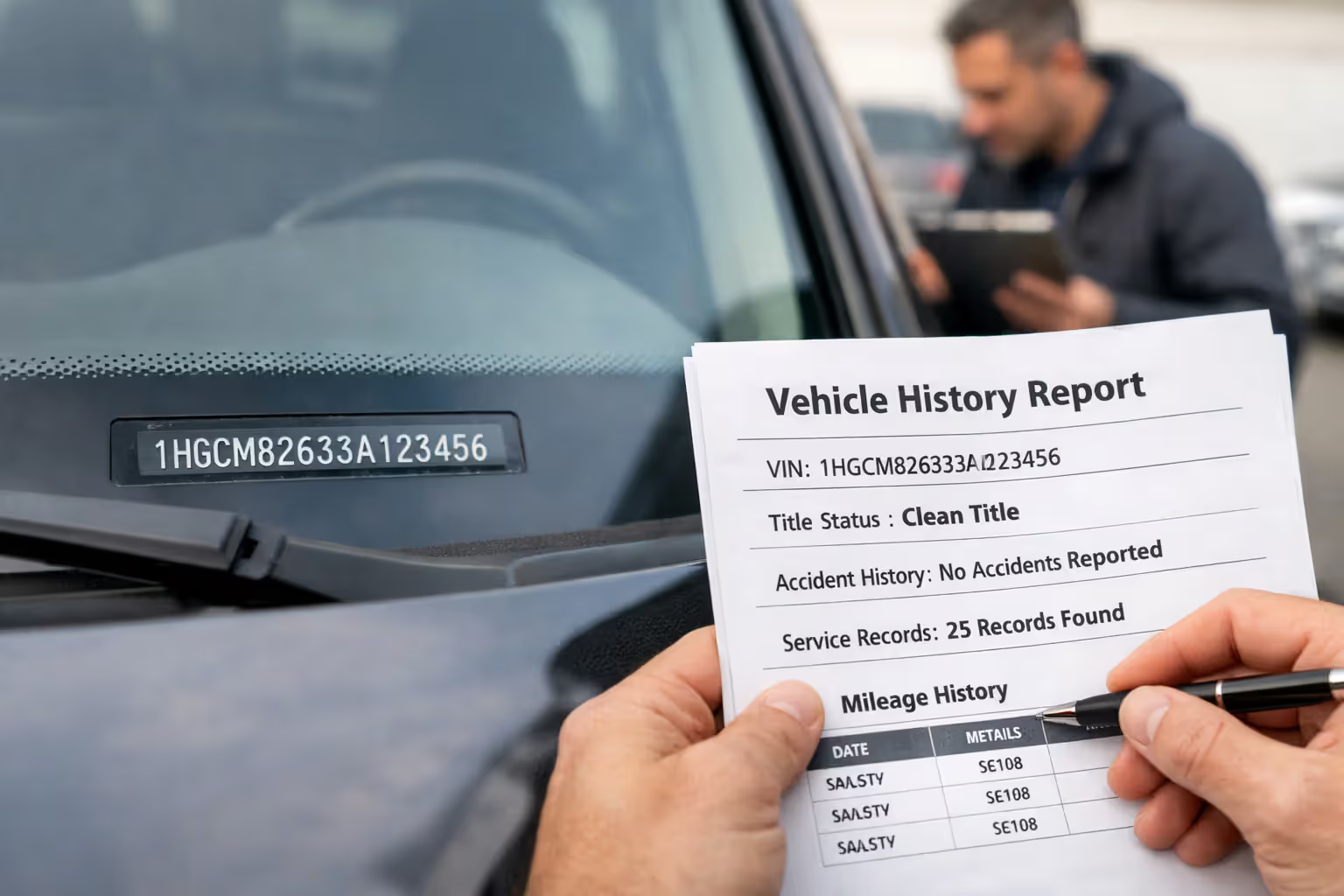
Step 5: Verify title ownership and lien status. Buy a Carfax or AutoCheck report for $40. Then verify through your state's DMV that the seller legally owns the vehicle with no outstanding liens. Some states offer instant online title verification; others require visiting a branch office with the VIN.
Author: Derek Halvorsen;
Source: ruralxchange.net
Step 6: Close the loan when everyone's ready to proceed. Your lender either cuts a check payable to the seller (which you hand-deliver), wires funds directly to the seller's account, or provides a bank cashier's check. Never let a seller convince you to withdraw cash—legitimate transactions use traceable payment methods that protect both parties.
Step 7: Transfer the title at your DMV within your state's required timeframe. Bring the signed title, bill of sale, insurance proof, and loan documentation. The lender gets listed as lienholder—their name stays on the title until you've finished paying the loan.
Common mistake I see constantly: buyers thinking they can find a car on Saturday and drive it home Sunday. The inspection alone takes 1-2 days to schedule. Lender verification adds another 1-2 days. Payment processing takes another day. Plan for a full week between finding the car and taking ownership, minimum.
Common Mistakes When Getting a Private Sale Car Loan
Skipping the mechanical inspection because the car looks pristine. Consumer Reports found that 35% of privately-sold used vehicles had problems the seller failed to disclose, averaging $1,800 in repairs. That one-owner Toyota with detailed service records? Still had a failing transmission the seller either didn't know about or deliberately hid. Spend the $150 on inspection—it's the cheapest insurance you'll buy.
Failing to verify title status until after you've committed to the purchase. Seller still owes $8,000 on the car but "promises" to pay it off at closing? Now you're coordinating between your lender, the seller's lender, and the seller—adding 1-2 weeks and significant complexity. Some buyers discover title problems only after they've already gotten financing approved and taken time off work for the deal.
Taking the first approval that comes through without shopping rates. Your bank approves you at 8.25%? Great. Now check two credit unions—you might find 6.5%. That 1.75% difference costs $1,800 on a $20,000 five-year loan. Thirty minutes of extra applications saves you real money.
Timing everything last-minute. You spot the perfect car Saturday evening. Your credit union doesn't process applications until Monday morning. They need three full business days for approval—that's Thursday. Meanwhile, another buyer showed up Sunday afternoon with pre-approval and bought your car. Get financing ready first, then shop seriously.
Ignoring loan-to-value calculations until final approval. You negotiate a $17,000 price for a car that books at $14,500. The lender caps LTV at 110%, so they'll approve $15,950 maximum. You need $1,050 extra in cash or you're renegotiating with the seller. Know the vehicle's book value before you agree on price.
Forgetting about insurance until closing day. Lenders require proof of comprehensive and collision coverage before they'll release funds. Some buyers discover this at 4pm Friday, insurance offices are closed, deal's delayed until Monday. Call your insurance agent the day your loan gets approved—add the vehicle while it's still pending, provide the lender with your declaration page immediately.
Not reading loan documents carefully before signing. Some lenders include prepayment penalties—fees if you pay the loan off early. Others use variable rates that adjust annually. A few include balloon payments at the end. I reviewed a loan last month with a $3,000 balloon payment in the final month—buyer had no idea until I pointed it out. Read every page or have someone knowledgeable review it with you.
Frequently Asked Questions
Getting financing for a private party vehicle requires more effort than dealer financing, but buyers who do the work properly often save $3,000-$5,000 between lower purchase prices and avoiding dealer fees.
Success comes down to preparation. Lock in pre-approval before shopping so sellers take you seriously. Verify title status and vehicle condition thoroughly rather than trusting appearances. Choose lenders with established private party programs instead of trying to force through approval with a lender who barely participates in this market.
Smart buyers start with credit unions—those competitive rates and flexible terms usually beat alternatives. Then compare those offers against online lenders and traditional banks to confirm you're getting the best available rate. They build in time for inspections and title verification instead of pressuring sellers to close deals in 48 hours.
While private sale financing takes longer than dealer financing and involves more coordination, combining lower purchase prices with reasonable financing terms often yields significant savings. Whether you're buying a meticulously maintained sedan from a neighbor downsizing their fleet or a specialty vehicle from an enthusiast three states away, the right financing approach transforms a potentially complicated transaction into a straightforward path to ownership.
Related Stories

Read more

Read more



The content on this website is provided for informational and educational purposes only. It offers general guidance on topics related to car loans, auto refinancing, interest rates, credit scores, loan terms, and vehicle financing options. The information presented should not be considered financial, legal, or professional advice.
Auto loan terms, interest rates, approval requirements, and refinancing options may vary depending on the lender, credit profile, and individual circumstances.
While we aim to keep the information accurate and up to date, we make no guarantees regarding its completeness or reliability. Visitors should review official loan documents and consult with qualified financial professionals before making decisions related to auto loans or refinancing.