

Car buyer discussing auto loan terms with a finance manager in a dealership
Minimum Credit Score for a Car Loan in 2025

Here's what most car buyers don't realize: there's no single cutoff number that determines approval. I've seen dealers work with borrowers at 480, while major banks reject applications at 640. The real threshold sits somewhere between 500 and 660 for traditional lenders—but where you fall in that range completely changes your financing options.
Subprime specialists might approve you at 450, though you'll pay the price. We're talking interest rates north of 18%, down payments eating up a fifth of the purchase price, and possibly dragging in a cosigner just to get the keys. The gap between "can I get approved" and "should I accept these terms" is massive.
Knowing where you stand before walking into a dealership prevents wasting time with lenders who'll reject you automatically—and helps you avoid predatory terms disguised as your "only option."
How Credit Scores Affect Car Loan Approval
Your credit score works like a batting average for borrowing money. That number—ranging from 300 to 850—tells lenders how reliably you've handled debt in the past. Pay everything on time for years? You're hitting .300 and every lender wants you. Default on a loan or rack up collections? You're barely making contact.
Here's the process when you apply: underwriters pull your score, then dig into your income documentation, current debt load, job history, and the specific car you're trying to finance. Your score typically carries more influence than your salary because decades of data prove it's the strongest predictor of default. Someone making $100,000 with a 540 score presents higher risk than someone earning $50,000 with a 720.
That's why lenders set floor numbers. They're not being arbitrary—they're filtering based on statistical models that show default rates spike below certain thresholds. But here's the confusing part: those floors vary wildly.
Traditional banks maintain strict minimums because they package loans into securities and sell them to investors expecting predictable returns. Credit unions sometimes bend lower, especially for existing members. Dealerships working with manufacturer-backed finance companies (think Ford Credit or Toyota Financial) often accept weaker credit because they're making money on both the car sale and the interest charges. And buy-here-pay-here lots? They'll finance almost anyone willing to accept 25% APR and weekly payment schedules.
This fragmentation means your 580 score might sail through at one place and get rejected instantly at another. That's not inconsistency—it's different business models serving different risk appetites.

Author: Brandon Ellsworth;
Source: ruralxchange.net
What Credit Score Do You Need for a Car Loan
Lenders sort borrowers into five buckets using FICO Auto Scores—a specialized version that weighs your automotive payment history heavier than your credit card habits. Where you land determines everything from approval speed to rate quotes.
Super prime (781–850): You're in the driver's seat. Lenders compete for your business with zero-percent promotional deals and barely glance at your documentation. You pick loan length, down payment amount, and negotiate from a position of strength.
Prime (661–780): Still excellent territory. You won't snag the promotional rates plastered on TV commercials, but you'll get competitive offers quickly. Most lenders approve you with minimal hassle, and you maintain real negotiating leverage.
Nonprime (601–660): This is where conditions start piling on. Lenders want verification—pay stubs, bank statements, employer contact information. Down payments climb to 10–15% of purchase price. Rates jump noticeably, potentially adding $50–$100 to your monthly payment compared to prime borrowers.
Subprime (501–600): Expect scrutiny. Underwriters examine employment gaps, verify your rent payments, and often require 15–20% down. Interest rates land between 15% and 22% for most borrowers. Many deals won't close without a cosigner backing you up.
Deep subprime (300–500): Your options narrow to specialized lenders and buy-here-pay-here operations. Rates regularly exceed 20%. Some dealers install GPS trackers that let them disable your engine remotely if you miss payments. Payment schedules switch from monthly to weekly or bi-weekly.
New Car Loans vs. Used Car Loans
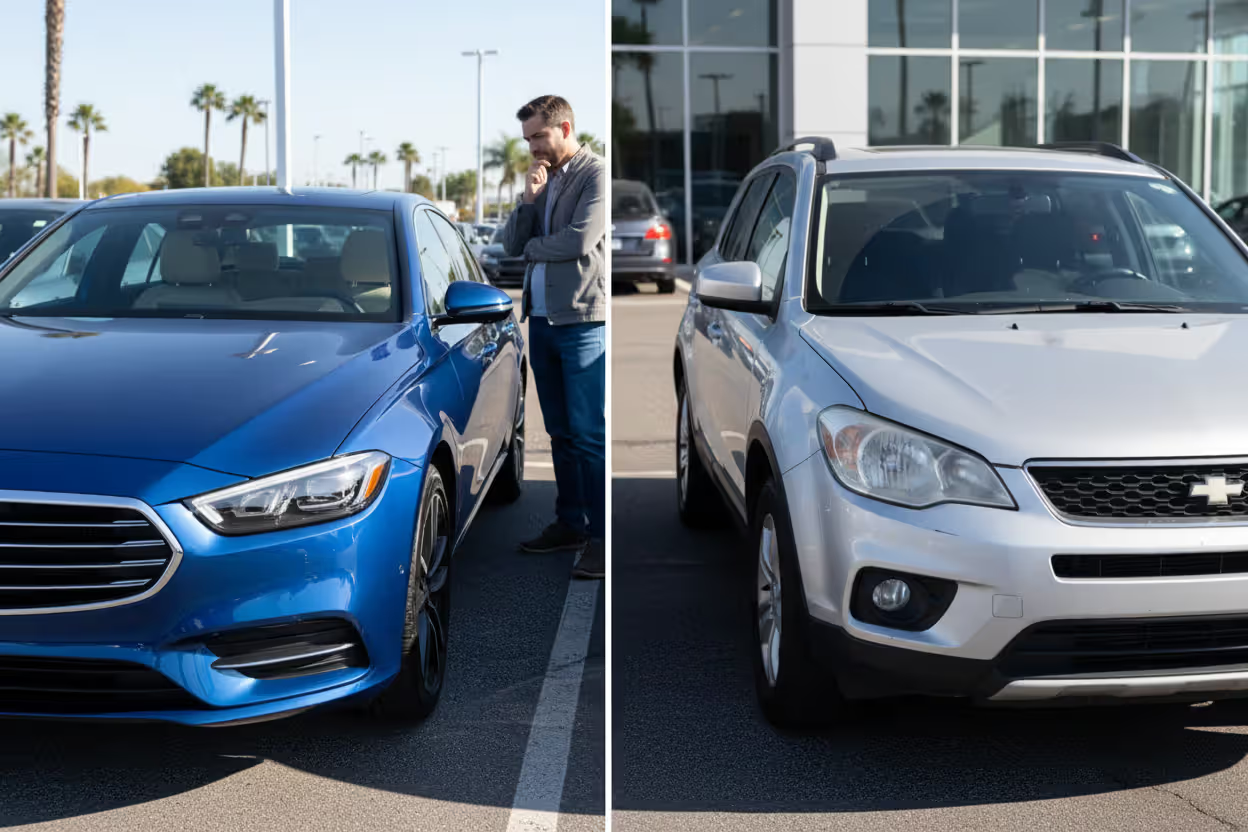
New vehicles come with higher credit expectations, particularly for attractive terms. Why? They lose value faster during those first three years, and lenders hate negative equity—situations where you owe $25,000 on a car worth $18,000. Most prefer seeing scores above 660 before approving large loans on brand-new inventory.
Used cars create breathing room. That same 580 score that can't touch a $40,000 new truck might easily qualify for a $15,000 certified pre-owned sedan. The lower loan amount reduces lender exposure. Plus, used vehicles have already eaten the worst depreciation hit, making the collateral more stable.
Catch? Used car rates run 1–3 points higher across every credit tier because older vehicles cost more to maintain and eventually break down, increasing default risk when borrowers face unexpected repair bills.
Author: Brandon Ellsworth;
Source: ruralxchange.net
Dealership Financing vs. Bank Loans
Dealerships function as middlemen. They submit your application to five or ten lenders simultaneously—industry folks call it "shotgun underwriting"—which boosts approval odds for borderline credit. The downside? Dealers routinely mark up whatever rate the lender approves. Your actual approval might be 8%, but the dealer quotes 10% and pockets the 2% spread as commission.
Banks and credit unions give you direct access. You get preapproved before stepping onto a lot, which transforms negotiations because you're shopping with cash equivalent. Credit unions particularly excel with challenged credit—many run second-chance programs accepting scores down to 580—and typically beat dealer rates by 1–2 percentage points. Trade-off: slower processing and membership requirements (though joining often just means opening a $5 savings account).
Lenders with Different Credit Score Requirements
Credit unions: These member-owned institutions often work with 580 scores, particularly when you've banked with them previously or can document steady employment. Navy Federal and PenFed both maintain second-chance auto programs offering reasonable rates for nonprime members. You'll submit additional documentation—recent pay stubs, last year's tax return, maybe a written explanation of past credit issues—but approval rates run higher than commercial banks.
National banks: Wells Fargo, Chase, and Bank of America generally want 650+ for standard auto loans. They'll occasionally flex for nonprime applicants showing strong income and minimal existing debt, but rates spike sharply and exceptions remain uncommon. These institutions prioritize efficiency and volume over relationship banking.
Online lenders: Capital One Auto Navigator and LendingClub built entire businesses around nonprime and subprime borrowers. Minimum scores typically hit 550, and you complete everything digitally. They've partnered with thousands of dealerships nationwide, so you shop with preapproval already in pocket. Rates reflect the elevated risk but stay more transparent than dealer-arranged financing where markup gets buried.
Captive lenders: GM Financial, Honda Finance, Hyundai Motor Finance—these manufacturer-owned operations approve scores as low as 520 when you're buying their brand. They subsidize rates to move inventory off lots and can extend promotional terms unavailable elsewhere. The restriction? You're locked into their vehicles, which limits shopping flexibility.
Buy-here-pay-here dealerships: These lots eliminate minimum score requirements entirely by financing purchases internally. They target deep subprime borrowers shut out everywhere else, charging 18–25% APR and demanding aggressive payment schedules. Many install GPS with remote kill switches. Inventory skews toward older, high-mileage vehicles because they need collateral they can easily repossess and resell.
How Your Credit Score Impacts Loan Terms and Interest Rates
Interest rates control both your monthly budget and total repayment amount over the loan's lifespan. A five-point spread sounds abstract until you run actual numbers. Here's what current market rates mean for a $30,000 loan over 60 months:
| Credit Score Range | Borrower Category | Average APR (New Car) | Average APR (Used Car) | Monthly Payment ($30,000 loan, 60 months) |
| 781–850 | Super Prime | 5.2% | 6.8% | $566 |
| 661–780 | Prime | 7.1% | 8.9% | $595 |
| 601–660 | Nonprime | 10.8% | 13.2% | $646 |
| 501–600 | Subprime | 16.3% | 18.7% | $732 |
| 300–500 | Deep Subprime | 21.5% | 23.9% | $828 |
That deep subprime borrower hands over $262 extra every month compared to super prime—accumulating to $15,720 in additional costs across five years. This math explains why spending three months improving your score before applying often saves more than any dealer negotiation tactic ever could.
Scores also dictate loan-to-value ratios. Prime borrowers might finance 110% of purchase price, covering taxes, registration fees, and accessories in the loan. Subprime borrowers face 85% LTV caps, forcing them to cover the difference via down payment or trade-in equity.
Loan duration changes by tier too. Super prime borrowers choose 72- or 84-month terms to shrink monthly payments (though this increases total interest paid over time). Subprime borrowers often hit 48- or 60-month maximums because lenders want repayment before the vehicle's value drops below the outstanding balance.

Author: Brandon Ellsworth;
Source: ruralxchange.net
Getting a Car Loan with Bad Credit or No Credit
A 580 score doesn't automatically disqualify you—it just requires strategic adjustments. The most effective approach combines three tactics: meaningful down payment, creditworthy cosigner, and smart vehicle selection.
Down payments: Putting 15–20% down cuts the lender's exposure and proves you've got skin in the game. On a $20,000 vehicle, that's $3,000–$4,000 upfront, dropping your financed amount to $16,000. Larger down payments also create equity cushion, protecting against going underwater when depreciation outpaces your payment schedule.
Cosigners: Adding someone with 680+ credit essentially lets you borrow their creditworthiness. Lenders evaluate both profiles and base approval on the stronger one. But cosigners take on complete liability—your default damages their credit and leaves them legally responsible for the debt. This works best with family members who trust your commitment and fully understand the stakes.
Subprime specialists: Credit Acceptance Corporation and Westlake Financial exclusively serve subprime borrowers. They approve applications traditional lenders reject, charging 15–22% APR as compensation for higher risk. These companies analyze alternative data—utility payment history, rent receipts, employment duration—to assess creditworthiness beyond scores alone. Applications require more documentation (bank statements, personal references) but approval rates jump significantly.
Vehicle selection: Target reliable, moderately priced cars with proven resale value. A five-year-old Civic or Corolla gets approved far easier than a luxury sedan because lenders know these models hold value and need fewer repairs. Skip anything with salvage titles, excessive mileage, or discontinued production—lenders frequently reject these regardless of your credit.
Credit-builder loans: Some credit unions offer small installment loans ($1,000–$2,000) specifically designed to establish payment history. Make on-time payments for six months and watch your score climb 30–50 points. This delays your car purchase but positions you for substantially better terms later.
Timing considerations: When possible, wait 90–180 days while addressing credit issues. Settling a collections account or cutting credit card balances below 30% utilization can push your score up enough to shift from subprime to nonprime territory, unlocking meaningfully better rates.

Author: Brandon Ellsworth;
Source: ruralxchange.net
How to Improve Your Credit Score Before Applying
Raising your score before applying can save thousands while expanding your lender options. Prioritize these high-impact moves:
Pull your credit reports: Grab free reports from all three bureaus (Equifax, Experian, TransUnion) at AnnualCreditReport.com. Hunt for errors—late payments you actually made on time, accounts belonging to someone else, outdated information still showing active. File disputes through each bureau's website; corrections usually process within 30 days and can boost scores 20–40 points when errors were significant.
Pay down revolving debt: Credit utilization—how much available credit you're using—controls 30% of your FICO score. Carrying $8,000 in balances against $10,000 in total limits puts you at 80% utilization, far above the recommended 30% ceiling. Drop that to $3,000 (30% utilization) and you might see 30–60 point improvements within one billing cycle.

Author: Brandon Ellsworth;
Source: ruralxchange.net
Avoid new credit inquiries: Every hard inquiry from loan or credit card applications can ding your score 3–5 points. Stacking multiple inquiries within weeks signals financial desperation to lenders. Auto loan shopping gets special treatment, though—FICO counts all car loan inquiries within a 14-day window as just one inquiry, so compress your rate shopping into two weeks.
Make payments on time: Payment history drives 35% of your score. Automate at least minimum payments on every account to avoid missed deadlines. A single 30-day delinquency can crater your score by 60–100 points and haunt your report for seven years.
Keep old accounts open: Credit history length influences 15% of your score. Shutting down your oldest card shrinks your average account age and typically hurts your score. Keep these accounts breathing with small recurring charges—a $10 streaming subscription, for instance—and pay them off monthly.
Consider a rapid rescore: Working with a mortgage broker or auto finance specialist? Ask about rapid rescoring. This service ($25–$50 per item) updates your credit report with documented recent improvements—a paid collection, a corrected error—within 3–5 business days instead of waiting 30+ for regular reporting cycles. Particularly valuable when you're straddling a threshold (599 vs. 601) that unlocks better rate tiers.
Most improvements need 30–90 days to materialize in your score. Shopping within the next month? Focus on paying down revolving debt and disputing errors. Got three to six months? Implement everything above for maximum impact.
Many borrowers assume they need a 700 credit score to get approved, but I regularly see clients with scores in the 580–620 range secure reasonable financing through credit unions and captive lenders.The key is understanding which lenders specialize in your credit tier and coming prepared with a down payment and proof of stable income. Shopping for the loan before you fall in love with a car gives you leverage to negotiate terms rather than accepting whatever the dealer offers
— Michael Torres
Frequently Asked Questions About Credit Scores and Car Loans
The minimum credit score for a car loan shifts dramatically based on which lender you approach, what type of vehicle you're financing, and your overall financial picture. Subprime lenders approve scores down to 500, but borrowers below 660 face substantially higher interest rates and tighter restrictions. Understanding how credit tiers affect approval probability and loan economics lets you target the right lenders and prepare strategically—whether that means improving your score before applying, building a larger down payment, or recruiting a cosigner.
When your credit needs work, focus on lenders specializing in your tier instead of burning applications at institutions that automatically reject subprime borrowers. Credit unions, captive lenders, and online subprime specialists typically offer better approval rates and clearer terms than dealership financing for most challenged-credit borrowers. Taking 90–180 days to strengthen your score before applying can elevate you into a better tier, potentially saving thousands over the loan's lifetime.
Related Stories

Read more

Read more




The content on this website is provided for informational and educational purposes only. It offers general guidance on topics related to car loans, auto refinancing, interest rates, credit scores, loan terms, and vehicle financing options. The information presented should not be considered financial, legal, or professional advice.
Auto loan terms, interest rates, approval requirements, and refinancing options may vary depending on the lender, credit profile, and individual circumstances.
While we aim to keep the information accurate and up to date, we make no guarantees regarding its completeness or reliability. Visitors should review official loan documents and consult with qualified financial professionals before making decisions related to auto loans or refinancing.